

 русский
 Kreyòl Ayisyen
 Gaeilgenah Éireann
 Norsk
 Srbija jezik (latinica)
 bosanski
 Português
 Français
 magyar
 বাংলা
 Polski
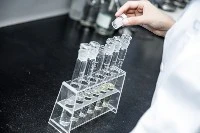
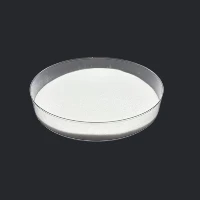
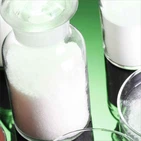

In fields like oil drilling, medicine, and daily chemicals, a special type of material called "water-soluble amphiphilic copolymers" plays a vital role. Imagine a substance that can mix smoothly with both water and oil, thicken liquids without clumping, and even stay stable in harsh conditions-this is exactly what these copolymers do. At the heart of making such useful materials is a key ingredient: N-vinyl pyrrolidone (NVP). Its pure polymer, polyvinyl pyrrolidone (PVP), is already widely used because it's safe (non-toxic to the human body), dissolves easily in water, and has good stability. You might find it in medical bandages (to keep wounds moist), cosmetic thickeners (to give lotions a smooth texture), or even food additives (to keep ingredients mixed). But here's the catch: NVP itself is quite expensive. If we only use pure PVP, the cost is too high for large-scale applications like oilfields. That's why scientists have been trying to mix NVP with other cheaper, more functional ingredients-creating "copolymers" that keep PVP's advantages while adding new properties and cutting costs.

1. Introduction: Why We Study N-Vinyl Pyrrolidone Copolymers
To understand why these copolymers matter, let's break down their core trait: being "amphiphilic." Every molecule has two parts-one that loves water (called "hydrophilic," like the sugar in your coffee) and one that hates water (called "hydrophobic," like oil). This dual nature lets them do two crucial things: first, they lower water's surface tension, which helps mix oil and water (useful for cleaning products or oil recovery); second, they can thicken liquids by linking together to form a "network" in water (perfect for keeping shampoo thick or oilfield fluids from getting too thin).
NVP is a star ingredient for making these copolymers because it checks all the boxes: it's safe (biocompatible, so it won't harm skin or the environment), easy to mix with other chemicals (it has a reactive "double bond" that bonds well with other monomers), and its hydrophilic part helps the copolymer dissolve in water. But pure NVP-based polymers have a big flaw-they can't handle the harsh conditions in real-world use. For example, in oil wells, the temperature can reach 65°C or higher, and the water is full of salt (like NaCl, CaCl₂). Pure PVP gets thin and breaks down quickly here, which means it can't help push oil out of the well effectively.
We set a clear goal: to design and manufacture three new NVP-based copolymers, test their key properties (such as their ability to reduce surface tension, handle heat, and dissolve in water), and check whether they work well with a common oilfield chemical called AP-P4 (an oil displacement agent that typically loses its thickening ability in heat and salt).
2. Making and Testing P(NVP/DMFA)
The first copolymer we created is called P(NVP/DMFA). To make it, they paired NVP with another chemical called dodecafluoroheptyl methacrylate (DMFA)-a smart choice because DMFA contains fluorine atoms. Fluorine is known for its stability in materials: it's resistant to heat, water, and corrosion.
The preparation process is simple and precise. We first mix NVP and DMFA in varying ratios (ranging from 99.7:0.3 to 98.5:1.5) in toluene, a solvent commonly used to dissolve chemicals. Once the mixture is complete, we add a small amount of AIBN (azobisisobutyronitrile), a chemical that "kicks off" the reaction by decomposing into free radicals. We heat the mixture to 80°C and allow it to react for 6 hours. After the reaction is complete, the mixture is poured into diethyl ether, another solvent, to precipitate the copolymer as a white powder. Finally, the powder is filtered and dried under vacuum to yield P(NVP/DMFA).
The tests showed this copolymer was impressive:
- Surface activity: When mixed with water at a concentration of 10g/L, it lowered water's surface tension from 72 mN/m (pure water) to 34 mN/m-a huge drop, meaning it's great at helping oil and water mix.
- Effect of temperature and salt: Hotter temperatures (from 25°C to 45°C) made it work even better-higher heat weakened the bond between the copolymer's hydrophilic parts and water, so the hydrophobic parts could group together more, lowering surface tension further. Adding salt (like NaCl) had a "U-shape" effect: a little salt (less than 0.01 mol/L) made surface tension go up slightly (because the salt made water more polar, so the hydrophobic parts spread out), but more salt (over 0.01 mol/L) made it drop again (the salt pushed the hydrophobic parts to group together).
- Aggregation behavior: When the copolymer was dilute (less than 0.1g/L), its molecules folded in on themselves (called "intramolecular association")-think of a string ball tightening up. When it was more concentrated (over 0.1g/L), the molecules linked together (called "intermolecular association")-like many string balls connecting to form a big net. This net is what makes liquids thick.
- Heat resistance: Using a machine called a thermogravimeter (TGA), they found the copolymer only lost weight (broke down) above 300°C. Before that, any weight loss was just water or small impurities. And as they added more DMFA, the breakdown temperature went up-proof that fluorine makes it more heat-stable.
- Oilfield use: When mixed with AP-P4 (a common oil-displacing agent that thins out in heat), adding 75mg/L of P(NVP/DMFA) made a big difference. At 45°C, after 400 hours of aging, the mixture's viscosity (thickness) stayed above 300 mPa·s-way higher than pure AP-P4, which dropped to 150 mPa·s. This means it could help keep oilfield fluids thick, pushing more oil out of wells.
3. Making and Testing P(NVP/MA)
The second copolymer is P(NVP/MA), and its superpower is solubility. The team paired NVP with maleic anhydride (MA)-a cheap, easy-to-find chemical that's great at one thing: making copolymers dissolve in water quickly. MA itself can't form a polymer on its own, but it bonds perfectly with NVP's double bond.
The synthesis was similar to the first copolymer: they mixed NVP and MA in ratios from 75:25 to 25:75 in toluene, added AIBN, heated to 80°C for 6 hours, and precipitated it with dichloromethane to get a light yellow solid. The best part? This solid dissolved in water instantly-no stirring for hours, which is a big plus for real-world use.
The tests showed its strengths (and a few weaknesses):
- Surface activity: It wasn't as good at lowering surface tension as P(NVP/DMFA)-at 10g/L, it only dropped to 45 mN/m. But that's still better than many common thickeners.
- Aggregation and stability: Like the first copolymer, it had a critical concentration of 0.1g/L (below that, folded; above that, linked into a net). It also handled heat well, but it broke down in two steps: first, the amide bonds in NVP broke at 200-300°C, then the main chain broke at 300-400°C. Adding more MA made the first breakdown temperature higher, which is good for stability.
- Oilfield use: When mixed with AP-P4, it shined in hot conditions. At 65°C (a common oil well temperature), adding just 25mg/L of P(NVP/MA) kept the mixture stable-after 800 hours, the viscosity was still above 220 mPa·s, while pure AP-P4 dropped to 80 mPa·s. MA's polar groups formed "hydrogen bonds" with AP-P4, holding the molecules together and stopping them from breaking down in heat.
4. Making and Testing HDA-P(NVP/MA)
The third copolymer, HDA-P(NVP/MA), is an upgraded version of the second copolymer. The research team noted that P(NVP/MA) exhibited poor hydrophobic associative properties-its hydrophobic moiety was insufficiently strong. Therefore, they modified it with hexadecylamine (HDA), a long-chain compound containing 16 carbon atoms. This long chain possesses exceptional hydrophobicity, allowing the copolymer to clump together better and reducing surface tension.
The modification process is simple: the P(NVP/MA) powder obtained in the second step is dissolved in acetone, followed by the addition of HDA. MA contains anhydride groups, which readily react with the amino groups of HDA (like two puzzle pieces fitting together). The reaction is allowed to proceed at room temperature for four hours, followed by the addition of a small amount of sodium hydroxide to neutralize the solution. The modified copolymer precipitates to form a white powder-HDA-P(NVP/MA).
The tests proved the upgrade worked:
- Surface activity: It lowered water's surface tension to 38 mPa·s at 10g/L-better than the unmodified P(NVP/MA) (45 mPa·s). And unlike the first two copolymers, adding salt only made surface tension drop (no U-shape)-the long HDA chains grouped together more as salt made water more polar.
- Heat resistance: It was the most heat-stable of the three. TGA tests showed it broke down in two steps: first, the HDA chains broke at 200-300°C, then the main chain broke at 300-450°C. The main chain breakdown temperature was 380°C-30°C higher than P(NVP/MA)-thanks to HDA's long chains acting as a "shield" for the main chain.
- Oilfield use: It was the most cost-effective. Adding just 25mg/L of HDA-P(NVP/MA) to AP-P4 made the mixture's viscosity reach 400 mPa·s after 400 hours at 45°C. The HDA chains and AP-P4's hydrophobic parts formed "synergistic associations"-they linked together tightly, making the mixture extra thick. A little went a long way, which would save money for oilfields.
5. What We Found and What's Next
After making and testing all three copolymers, the team drew clear conclusions:
- Each copolymer has its superpower: P(NVP/DMFA) is best for lowering surface tension and handling heat; P(NVP/MA) dissolves instantly and works in hot wells; HDA-P(NVP/MA) is cheap (works in small amounts) and super heat-stable.
- Key rules for aggregation: All three had a "critical concentration" of ~0.1g/L-below that, molecules fold; above that, they link into a net. Hotter temperatures and more salt pushed them to link together, which is exactly what's needed for thickening oilfield fluids.
- Oilfield value: When mixed with AP-P4, each copolymer fixed AP-P4's weakness (losing viscosity in heat/salt). This means they could be used as additives to make oil recovery more efficient.
We hope to explore two avenues: testing these copolymers in medicine-could they be used as drug carriers (to slowly release drugs in the body) or as biocompatible coatings (for medical devices)? Or we could optimize the synthesis process to reduce the cost of the copolymers-currently, some ingredients, like DMFA, are still expensive, so finding cheaper alternatives could help factories produce them on a large scale.
With more research, these N-vinyl pyrrolidone copolymers could become staples in oilfields, hospitals, and even our daily lives-making products safer, more effective, and more affordable.