

 русский
  Kreyòl Ayisyen
 Gaeilgenah Éireann
 Norsk
Norsk Srbija jezik (latinica)
 bosanski
 Português
 Français
 magyar
 বাংলা
বাংলা Polski


Hangzhou Rainbow Import & Export Co., Ltd. is one of the leading manufacturers and suppliers of insoluble polyvinylpyrrolidone in China. With abundant experience, we warmly welcome you to buy customized insoluble polyvinylpyrrolidone from our factory. If you have any enquiry about free sample, please feel free to email us.
Insoluble Polyvinylpyrrolidone, also commonly called polyvidone or povidone, is a water-soluble polymer compound made from the monomer N-vinylpyrrolidone. PVP is available in a range of molecular weights and related viscosities, and can be selected according to the desired application properties.
Why Choose Us?
Rich Experience
1992, Zhejiang Sunflower New Material Co.,Ltd. which was predecessor of STD, engaged in PVP, was set up and Mr. Wu Jiaxiang, the chief expert of the state's R&D project for PVP in China, was appointed as the general manager.
Advanced Equipment
2004, Zhejiang MY Sunflower Pharmaceutical Co.,Ltd. which is JV of STD was established for production of PVP in Pharm.Grade. GMP workshops were founded for POVIDONE, POVIDONE IODINE and POVIDONE IODINE SOLUTION.
Reliable Product Quality
2010, SPP expand the factory from 4000M2 to 12,000M2. After that the capacity of 3500tons of powder and 5000tons of liquid products annually till the end of 2011.
Professional Technical Team
Led by Mr. Wu Jiaxiang, the main PVP founder in China, the team possessed tens of concerned process and application techniques, gathered 35 years of experience of sustainable R&D, engineering practice and marketing, specially in Polyvinylpyrrolidone series (Povidone, Crosspovidone, Copovidone and Povidone iodinated), Chondroitine Sulfate Sodium series and artificial cultivating of Cordyceps.

Professional Manufacturer of Crospovidone Series Stabilizer for Suspension
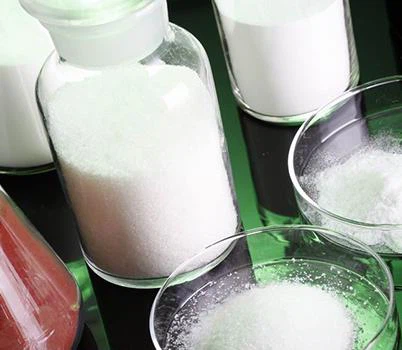
SUNVIDONE ® CL Synonyms: Crospovidone;Crospovidonum; Insoluble polyvinylpyrrolidone, crosslinked PVP INCI: PVPP CAS No.:[9003-39-8] Trade Name: Sunvidone ® CL SPECIFICATION CRACTERISTICS SUNVIDONE® CL series are supplied as fine white or almost white powders. They have a slight characteristic.
Insoluble polyvinylpyrrolidone SUNLYDONE® CL (food grade) STRUCTURE & NOMENCLATURE (C 6 H 9 NO) n Synonyms: PVPP, Crosslinked Polyvinylpyrrolidone CTFA/INCI: Insoluble PVP CAS No.: [25249-54-1] Trade name: Sunvidone CL CHARACTERS White to yellowish fine powder, hygroscopic, odorless or with.
Cross Linked PVP Polyvinylpyrrolidone
Insoluble polyvinylpyrrolidone SUNLYDONE® CL (food grade) STRUCTURE & NOMENCLATURE (C 6 H 9 NO) n Synonyms: PVPP, Crosslinked Polyvinylpyrrolidone CTFA/INCI: Insoluble PVP CAS No.: [25249-54-1] Trade name: Sunvidone CL CHARACTERS White to yellowish fine powder, hygroscopic, odorless or with.
Polyvinylpyrrolidone(PVPP) 25249-54-1
Insoluble polyvinylpyrrolidone SUNLYDONE® CL (food grade) STRUCTURE & NOMENCLATURE (C 6 H 9 NO) n Synonyms: PVPP, Crosslinked Polyvinylpyrrolidone CTFA/INCI: Insoluble PVP CAS No.: [25249-54-1] Trade name: Sunvidone CL CHARACTERS White to yellowish fine powder, hygroscopic, odorless or with.
Insoluble polyvinylpyrrolidone SUNLYDONE® CL (food grade) STRUCTURE & NOMENCLATURE (C 6 H 9 NO) n Synonyms: PVPP, Crosslinked Polyvinylpyrrolidone CTFA/INCI: Insoluble PVP CAS No.: [25249-54-1] Trade name: Sunvidone CL CHARACTERS White to yellowish fine powder, hygroscopic, odorless or with.
Insoluble Polyvinylpyrrolidone
Insoluble polyvinylpyrrolidone SUNLYDONE® CL (food grade) STRUCTURE & NOMENCLATURE (C 6 H 9 NO) n Synonyms: PVPP, Crosslinked Polyvinylpyrrolidone CTFA/INCI: Insoluble PVP CAS No.: [25249-54-1] Trade name: Sunvidone CL CHARACTERS White to yellowish fine powder, hygroscopic, odorless or with.
One polymer commonly used in the technology of solid dispersions is Insoluble Polyvinylpyrrolidone. It occurs in the form of fine, white to creamy-white colored, odorless and very hygroscopic powder that absorbs water up to 40% of its weight from the atmosphere. A great advantage of this excipient is its low toxicity and the affinity to both: hydrophilic and hydrophobic molecules.
In pharmaceutical industry Insoluble Polyvinylpyrrolidone grade has been widely used. However, due to its high glass transition temperature the use of this polymer in the melt method is impossible, but its good solubility in most organic solvents makes it good for preparing solid dispersions by the solvent evaporation or milling.
Chemical Properties of Insoluble Polyvinylpyrrolidone
Commonly used PVP level in the cosmetic industry is K-30. Commercialized PVP is white and free flowing powder or solids with its content in the mass fraction of 20%, 30%, 45% and 50% aqueous solution. PVP is soluble in water and is hygroscopic with a moisture equilibrium being 1/3 of the relative humidity of the environment. Similar as the protein hydration action, each monomer associates with 0.5mol water.
PVP is not easy to have chemical reaction. When stored at normal conditions, dry PVP is quite stable. Solution undergone mildew treatment is also stable. When heated in air to 150 °C or mixed with ammonium persulfate to heat at 90 °C for 30min, PVP will be exchanged to become a water-insoluble compound. In the presence of azo compound or a dichromate oxidizing agent, light will cause PVP solution to become gel. The co-heating of PVP solution with strong base (such as sodium silicate or trisodium phosphate) will generate precipitation. Many different compounds can generate complexes with PVP. For example, the complexes of PVP and iodine is very stable and have a good bactericidal effect and can reduce its toxicity; Adding the copolymers of the polyacrylic acid, tannic acid or methyl vinyl ether and maleic acid to the aqueous solution of PVP will generate insoluble complexes which are insoluble in water, alcohols and ketones. But when being treated with base for neutralize the poly-acid can reverse the reaction; complexation between PVP and toxins, drugs and toxic chemicals can reduce their toxicity; some kinds of dyes can also form a strong complex with PVP, which is the basis for using PVP as a dye bleaching agent.
Uses of Insoluble Polyvinylpyrrolidone
Form a suspension
The main idea behind using PVP is to easily distribute or suspend an otherwise insoluble solid in a liquid.
Prevent emulsions from separating
PVP helps to keep emulsions from separating into their oil and liquid components.
Hold ingredients together
PVP aids in holding together the ingredients of a compressed tablet or cake.
Does not leave any residue
The application of PVP-containing products does not leave any sticky layer on the applied region but dries to form a thin coating on the skin, hair or nails.
Helps maintain the integrity of the hair
When formulated in hair care products, PVP holds the structural integrity of hair strands and helps in maintaining a good hairstyle. This is because PVP inhibits the hair's ability to absorb moisture.
As a food additive
Non-cosmetic uses of PVP have also been reported, including its use as a food additive.
As an antiseptic
PVP is also a component of over-the-counter drugs (OTC) and an antiseptic when combined with iodine.
As a clarifying agent
PVP is used as a clarifying agent in beer, wine, and vinegar production.
As an adjuvant
PVP is also used as an adjuvant in the coatings applied on fresh citrus fruits.
How Is Insoluble Polyvinylpyrrolidone Manufactured?
Insoluble Polyvinylpyrrolidone has been used in a wide range of areas, for example, as a harmless functional polymer, for applications such as cosmetics, intermediates of drugs and agricultural chemicals, food additives, photosensitive electronic materials, and adhesion providing agents, or for various special industrial applications. Polyvinylpyrrolidone is usually produced by polymerizing N-vinyl-2-pyrrolidone using hydrogen peroxide as a polymerization initiator in a presence of a metal catalyst in an aqueous medium. The use of a primary, secondary, or tertiary amine as a promoter in the polymerization makes the rate of polymerization slow and brings the coloration of the resulting polymer. In contrast, the use of ammonia as a promoter in the polymerization allows the polymerization to rapidly progress and to prevent the coloration of the resulting polymer.
A solid preparation of polyvinylpyrrolidone is obtained by heat drying an aqueous solution of polyvinylpyrrolidone to sufficiently evaporate the water content of the aqueous solution. However, if ammonia is contained in an aqueous solution of polyvinylpyrrolidone, the cross-linking reaction or graft reaction of polyvinylpyrrolidone may progress in the step of heat drying, resulting in a high molecular weight polyvinylpyrrolidone which is not soluble in water. Moreover, when the resulting solid preparation of polyvinylpyrrolidone is dissolved in water, the solution may cause gelation. Therefore, there has been a demand for high-quality polyvinylpyrrolidone which caused less coloration and substantially no formation of insoluble matter and gelled matter.
Povidone, also known as polyvinylpyrrolidone (PVP) or polyvidone, is a synthetic water-soluble polymer made from the monomer N-vinylpyrrolidone used as a binder in many pharmaceutical tablets and lubricant in eye drops. It is also used in many technical applications with various roles as an adhesive, additive, and emulsifier.
When in complex with iodine, Povidone-iodine displays antiseptic properties where the iodine, a bactericidal component, mainly contributes to this effect, and povidone acts as a carrier. Povidone-iodine can be found in over-the-counter topical solutions, ointment, pessaries, liquid soaps and surgical scrubs. The clinical effectiveness of Povidone-iodine on wound healing remains somewhat controversial, as it was demonstrated in a few clinical studies that the application of the compound in wounds was associated with impaired wound healing, reduced wound strength, or infection in open wounds.

Is Insoluble Polyvinylpyrrolidone Good for Your Skin?

In cosmetic products, it is used as a film-former, emulsion stabilizer, hair fixing, and viscosity controlling agent. As a film-forming agent, since it is a polymer when applied to the hair or skin, it forms a cohesive, and continuous layer. This layer also holds water molecules on the surface and does not allow them to escape which helps the skin utilize and produce a silky and smooth effect on the skin.
As a binding agent, it helps in binding or holding together the ingredient in a cosmetic product in the compressed cake or tablet form of a product. It prevents other ingredients of the product from falling apart. It also gives stability to an emulsion and prevents the ingredients of the product from getting separated into their oil and water components. When used on hair it forms a thin film on it and helps to control and fix the style. It also controls the viscosity of the product and makes it less runny and enhances its spreadability. It is used in formulations of make-up products, creams, lotions, gels, and other skin and hair care products.
Our Factory
The company has the GMP production lines of 600 tons annually of Povidone at low molecular weight ( Povidone K12, K15, K17, K25 and K30), 800 tons annually of Povidone at high molecular weight ( Povidone K60, K90, K120), 300 tons annually of Povidone Iodinated with high stability and 100tons annually of Chondroitine Sulfated Sodium. The company also first finished the industrial cultivation of artificial cultivating of Cordyceps and the concerned products are under marketing now. HSP will take pharmaceutical biological products or biological extracts with advantage of techniques or resources as the new development direction
FAQ
Q: What is the function of Insoluble polyvinylpyrrolidone?
Q: Is Insoluble polyvinylpyrrolidone bad for you?
Q: Is Insoluble polyvinylpyrrolidone ingredient safe?
Q: Is Insoluble polyvinylpyrrolidone the same as povidone?
Q: What is insoluble polyvinylpyrrolidone?
Q: What is the chemical property of insoluble polyvinylpyrrolidone?
Q: Is Insoluble polyvinylpyrrolidone edible?
Q: Is Insoluble polyvinylpyrrolidone good for your skin?
Q: Can you be allergic to Insoluble polyvinylpyrrolidone?
Q: Is Insoluble polyvinylpyrrolidone safe for teeth?
Q: Is Insoluble polyvinylpyrrolidone a base or acid?
Q: Is insoluble polyvinylpyrrolidone safe?
Q: How is insoluble polyvinylpyrrolidone manufactured?
Q: Is insoluble polyvinylpyrrolidone safe for hair?
Q: Is insoluble polyvinylpyrrolidone widely used in adhesive formulations?
Hot Tags: insoluble polyvinylpyrrolidone, China insoluble polyvinylpyrrolidone factory, crosslinked vinylpyrrolidone polymer for industrial use, vinylpyrrolidone crosslinked polymer for production, vinylpyrrolidone crosslinked polymer for stabilizing substances, nvp crosslinked polymer for coatings, crosslinked vinylpyrrolidone polymer for plastic industry, crosslinked vinylpyrrolidone polymer in chemical industry


