

 русский
  Kreyòl Ayisyen
 Gaeilgenah Éireann
 Norsk
Norsk Srbija jezik (latinica)
 bosanski
 Português
 Français
 magyar
 বাংলা
বাংলা Polski


Hangzhou Rainbow Import & Export Co., Ltd. is one of the leading manufacturers and suppliers of cross linked pvp polyvinylpyrrolidone in China. With abundant experience, we warmly welcome you to buy customized cross linked pvp polyvinylpyrrolidone from our factory. If you have any enquiry about free sample, please feel free to email us.
Huzhou Sunflower Pharmaceutical Co. Ltd. focus on the development and producing of pharmaceutical excipients and API's. Led by Mr. Wu Jiaxiang, the main PVP founder in China, the team possessed tens of concerned process and application techniques, gathered 35 years of experience of sustainable R&D, engineering practice and marketing, specially in Polyvinylpyrrolidone series (Povidone, Crosspovidone, Copovidone and Povidone iodinated), Chondroitine Sulfate Sodium series and artificial cultivating of Cordyceps. The company is well known as full range covering, high quality and good service in the industry. The company is widely praised by the customer both at home and abroad.

Our Advantages
01
Products Widely Used
Our company produces NVP Homopolymer, NVP Copolymer, NVP Crosslinked Polymer, PVP Complex Compound and so on, which are widely used in the field of industry, pharmaceutical, cosmetics.
02
Strong Production Capability
Our company has the GMP production lines of 600 tons annually of Povidone at low molecular weight ( Povidone K12, K15, K17, K25 and K30), 800 tons annually of Povidone at high molecular weight ( Povidone K60, K90, K120), 300 tons annually of Povidone Iodinated with high stability and 100tons annually of Chondroitine Sulfated Sodium.
03
Quality Guaranteed
Our company has passed ISO quality certification system. Our company has obtained certificates such as ISO9001:2008, MF032698. All products are strictly tested in accordance with industry standards and contract agreements before leaving the factory.
04
Rich Products
Our company has rich products, such as Polyvinylpyrrolidone series (Povidone, Crosspovidone, Copovidone and Povidone iodinated), Chondroitine Sulfate Sodium series and artificial cultivating of Cordyceps.
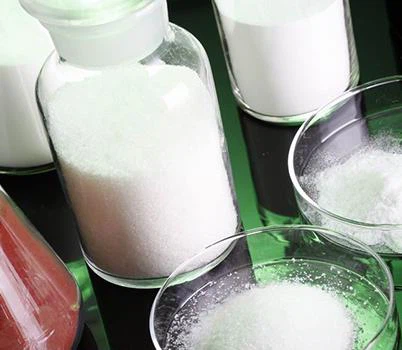
Polyvinylpyrrolidone(PVPP) 25249-54-1
Polyvinylpyrrolidone(PVPP) 25249-54-1 is white to yellowish fine powder, hygroscopic, odorless or with a faint characteristic odor, insoluble in water, alkali, acid and common organic solvents, easily swellable in water without forming gels.
PVP added to iodine forms a complex called povidone-iodine that possesses disinfectant properties. This complex is used in various products such as solutions, ointment, pessaries, liquid soaps, and surgical scrubs.
Insoluble Polyvinylpyrrolidone
Insoluble Polyvinylpyrrolidone is hygroscopic, insoluble in water and all other common solvents, but rapidly expands in aqueous solution.It does not contain any gel foam. According to different particle sizes, it is divided into type A and type B.

Professional Manufacturer Of Crospovidone Series Stabilizer For Suspension
Crospovidone Series Stabilizer For Suspension is supplied as fine white or almost white powders. It has a slight characteristic odour and are practically tasteless. It is insoluble in all the usual solvents. This series possess a number of useful properties for pharmaceutical products. It can Improve tablet disintegration and therefore also release and bioavailability of drugs through predictable swelling (disintegration effect). It can Selectively adsorb polyphenols by complexation.
Insoluble polyvinylpyrrolidone SUNLYDONE® CL (food grade) STRUCTURE & NOMENCLATURE (C 6 H 9 NO) n Synonyms: PVPP, Crosslinked Polyvinylpyrrolidone CTFA/INCI: Insoluble PVP CAS No.: [25249-54-1] Trade name: Sunvidone CL CHARACTERS White to yellowish fine powder, hygroscopic.
Cross Linked PVP Polyvinylpyrrolidone
Insoluble polyvinylpyrrolidone SUNLYDONE® CL (food grade) STRUCTURE & NOMENCLATURE (C 6 H 9 NO) n Synonyms: PVPP, Crosslinked Polyvinylpyrrolidone CTFA/INCI: Insoluble PVP CAS No.: [25249-54-1] Trade name: Sunvidone CL CHARACTERS White to yellowish fine powder, hygroscopic.
Introduction to Cross Linked PVP Polyvinylpyrrolidone
Cross Linked PVP Polyvinylpyrrolidone is a common, FDA-approved inactive ingredient used in the pharmaceutical industry. Cross Linked PVP Polyvinylpyrrolidone is often combined with active ingredients in medications and dietary supplements to allow absorption of the active drug. It is considered a synthetic povidone analog. Chemically, Cross Linked PVP Polyvinylpyrrolidone is an inert and insoluble white to light yellow free-flowing powder. It has hygroscopic, or water-attracting properties with excellent swelling characteristics. It is this swelling characteristic that makes it useful as a disintegrant in pharmaceutical dosage forms. Cross Linked PVP Polyvinylpyrrolidone is not absorbed orally. Oral use of crospovidone is not usually associated with toxicity in normal use as a pharmaceutical excipient.
Advantages of Cross Linked PVP Polyvinylpyrrolidone
Cross Linked PVP Polyvinylpyrrolidone can form complexes with a variety of medicines and other substances. The formation process is reversible and will not form in alkaline media. It is easier to form complexes with aromatic compounds containing phenyl and/or carboxyl groups. Therefore, in the pharmaceutical industry, it can improve the solubility and bioavailability of medicines, improve the taste of paracetamol, adsorb and remove polyphenols and tannins from tinctures and herbs, and has the effect of resisting diarrhea, gastritis, ulcers, esophageal hiatal cancer, etc.
Cross Linked PVP Polyvinylpyrrolidone has high capillary activity, so it can quickly absorb water into tablets. Because the internal pressure (swelling pressure) exceeds the strength of the tablet, the tablet disintegrates instantly. Because there are folded molecular chains between the cross-links, when water or aqueous solution penetrates, it is stretched by the sudden impact and forced to separate immediately. The result of expansion increases the net volume, causing the tablets prepared with Cross Linked PVP Polyvinylpyrrolidone tablet disintegrants to disintegrate immediately.
Cross Linked PVP Polyvinylpyrrolidone has excellent fluidity and plastic deformation, so they have excellent bonding. This property gives good compressibility in spraying, drying, and wet granulation. Compared with commonly used starch, cellulose preparations and pectin compounds, the addition of Cross Linked PVP Polyvinylpyrrolidone tablet disintegrants to tablets does not affect the hardness and abrasion resistance of the tablets, and the tablet capping is not reduced. Cross Linked PVP Polyvinylpyrrolidone can also be effectively used as a tablet disintegrant in direct tableting without the use of lubricants or the addition of adhesives.
Cross Linked PVP Polyvinylpyrrolidone as a tablet disintegrant has high capillary activity and hydration capacity because of their large specific surface area and significant water absorption (water absorption of up to 60% or more).
Cross Linked PVP Polyvinylpyrrolidone has very good compatibility with a variety of organic and inorganic pharmaceutical excipients and active ingredients. Solid drugs containing Cross Linked PVP Polyvinylpyrrolidone tablet disintegrants can be easily produced using common tablet production technologies, including direct compression, spraying, drying and wet granulation.
The PVP Aqueous Solution Was Treated With Persulfates Such As NaZSZO:, KZSZO
To generate cross-linked PVP gel. In order to obtain a gel with moderate strength, the required persulfate concentration is very high, generally twice the concentration of PVP. The exact mechanism of persulfate cross-linking PVP is still unclear. The possible explanation is that persulfate is thermally decomposed into sulfate ion radicals and hydroxyl radicals in aqueous solution, which can capture a hydrogen atom from the polymer molecule to generate macromolecular free radicals. These macromolecular free radicals diffuse and move through molecules or chain segments, and can form stable covalent cross-links with each other.
In The Presence Of Peroxide, a-Diene Is Used To Cross-Link The PVP Solution
The cross-linking reaction is to prepare a reaction solution of 1 mol PVP and 0.02-0.3 mol of a certain α-diene such as 1,7-octadiene with an organic solvent, wherein each mol of α-diene contains 0.5-1.0 mol of peroxide, and react at a constant temperature of 100-200 ° C for 1-30 hours, and then remove the organic solvent by vacuum distillation to obtain a cross-linked product. The reaction solvent should be a common solvent for α-diene and PVP, and various alcohols such as methanol, ethanol and 1,4-butanediol can be used. Due to the high reaction temperature, if a low-boiling organic solvent is used, the reaction needs to be pressurized. Any α-diene with a molecular weight between 68 and 280 can be used as a cross-linking agent. By changing the relative concentration of α-diene and the reaction time, various products with different solubility can be obtained, from cross-linked PVP with
different solubility to PVP gel that is completely insoluble in water.
Cross-linked PVP Can Also Be Prepared By Copolymerization Of Nvp Monomer And Cross-Linking Agent
NVP and an appropriate amount of crosslinking agent and free radical initiator are subjected to precipitation polymerization in an aqueous electrolyte solution. The resulting product is a porous granular NVP crosslinked polymer after filtration, washing and drying. Commonly used crosslinking agents in the polymerization system include the following multifunctional compounds: alkylene bisacrylamide such as N, N'-methylene bisacrylamide, etc.; divinyl aromatic compounds such as divinylbenzene, divinylethylbenzene, etc. Free radical initiators commonly used in vinyl polymerization reactions are suitable for this reaction, including peroxide initiators such as diphenylphthalide peroxide, ditert-butyl peroxide, etc., and azo compounds such as azobisisobutyronitrile, etc. Since NVP monomers can only be partially dissolved in aqueous electrolyte solutions, when the amount of NVP exceeds its saturation in aqueous electrolyte solutions, a heterogeneous polymerization system can be maintained by mechanical stirring. Buffer solutions such as disodium hydrogen phosphate are often added to the reaction system to make the reaction solution neutral or weakly alkaline.
Application of Cross Linked PVP Polyvinylpyrrolidone
Used As PVP-Iodine Complex
PVP can complex with many compounds, and the resulting complex has certain physical and chemical stability. Among them, the most commonly used is PVP-iodine complex, which maintains the broad-spectrum bactericidal effect of iodine but reduces the irritation of iodine. It has been widely used as a bactericidal disinfectant. Moderately cross-linked cross-linked PVP porous particles can also form complexes with iodine, which can slowly release iodine and are mainly used in water purification, such as disinfecting water in swimming pools. Cross-linked PVP-I complexes can be prepared by blending iodine with cross-linked PVP porous particles in a dry state, or by mixing cross-linked PVP porous polymers with iodine solutions.
Used As Trauma Bandage
In addition, cross-linked PVP can also be used as a trauma bandage. The ideal material that can cover large open burns or traumatic wounds should have the following characteristics: good ability to absorb liquids; permeable to air but shielding bacteria; absorb and release drugs; the tape is soft but has certain mechanical strength. The spongy loose material generated by drying the cross-linked PVP gel can meet the above requirements and has a good effect as a wound dressing.
Used As Static Cell Culture Medium
In the biological field, cross-linked PVP also has a wide range of uses. For example, cross-linked PVP hydrogel can be used as a static cell culture medium. Its insolubility prevents it from penetrating the cell membrane, while its good water absorption and physiological inertness can protect and promote cell growth. Research has been conducted on the use of cross-linked PVP hydrogel as a substitute for vitreous humor of the eye. Films made of cross-linked PVP have excellent biocompatibility and adhesiveness and can be used to seal and bond biomaterials. For example, a PVP aqueous solution containing a certain amount of photoinitiator is coated on the surface of a biomaterial. Under ultraviolet light irradiation, the linear PVP will undergo cross-linking, solidify into a film, and coat the surface of the material to play a sealing role. In the presence of a porogen, the macroporous cross-linked PVP prepared by suspension polymerization is a new type of adsorbent with good blood compatibility, which can specifically remove opioid anesthetics. When used for blood perfusion, it can remove toxins from the blood and achieve the purpose of purifying the blood and detoxifying.
Use of Cross Linked PVP Polyvinylpyrrolidone to Stabilise Suspensions
Micronised Crospovidone (Type B) can be added in concentrations of 5 – 12% to oral and topical suspensions to stabilise oral and topical formulations. This grade achieves this effect by increasing the volume of the sediment and reducing its sedimentation rate, and by making it easy to redisperse the sediment by shaking (anticaking effect). These effects are achieved without increasing the formulation's viscosity.
The ability to stabilise suspensions without increasing thickness is particularly useful in ready-to-use suspension or an instant drink-type powder or granulate formats that require the consumer to prepare before use.
The addition of electrolytes such as sodium citrate as well as xanthan gum or sugar syrups is recommended as it increases the sediment volume achieved with Crospovidone in these formulations.
Certificate


Ultimate FAQ Guide to Cross Linked PVP Polyvinylpyrrolidone
Hot Tags: cross linked pvp polyvinylpyrrolidone, China cross linked pvp polyvinylpyrrolidone factory, nvp crosslinked polymer for cosmetics, vinylpyrrolidone crosslinked polymer for stabilizing substances, polymer crosslinked nvp for solubility applications, nvp crosslinked polymer for adhesives, nvp crosslinked polymer used in flexibility, vinylpyrrolidone crosslinked polymer for production

