

 русский
 Kreyòl Ayisyen
 Gaeilgenah Éireann
 Norsk
 Srbija jezik (latinica)
 bosanski
 Português
 Français
 magyar
 বাংলা
 Polski


The performance of a formulation depends not only on its active ingredients, but also on how effectively its functional excipients support stability, processing, and product quality. Polyvinylpyrrolidone (PVP), also known as povidone, is a versatile synthetic polymer used in pharmaceutical manufacturing, personal care products, cosmetics, food-related applications, and specialty industrial formulations. Its water solubility, film-forming capability, binding strength, and compatibility with various ingredients make it a valuable material for manufacturers seeking consistent formulation performance.Understanding what polyvinylpyrrolidone is used for requires more than identifying its general applications. Different PVP grades provide different molecular weight characteristics and functional properties, which influence their suitability for specific manufacturing processes.For pharmaceutical buyers, selecting the right polyvinylpyrrolidone manufacturer is equally important. Product specifications, impurity limits, batch consistency, technical documentation, and supply reliability all contribute to successful raw material qualification.

Polyvinylpyrrolidone at a Glance
| Item | Description |
|---|---|
| Chemical name | Polyvinylpyrrolidone |
| Common abbreviation | PVP |
| Alternative name | Povidone |
| CAS number | 9003-39-8 |
| Polymer type | Synthetic, non-ionic polymer |
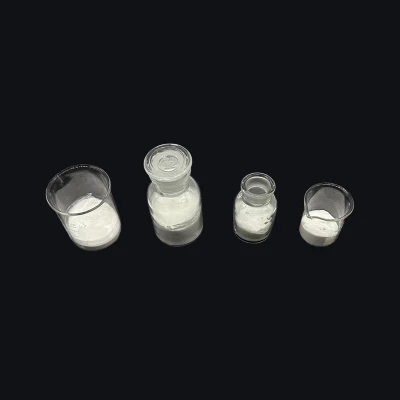
| Appearance | Typically white or almost white powder, depending on grade |
| Key properties | Water solubility, binding, film formation, and complexation |
| Common pharmaceutical grades | PVP K12, K15, K17, K25, K30, K60, K90 and other available grades |
| Major industries | Pharmaceuticals, cosmetics, personal care, and specialty formulations |
Specifications vary by grade and manufacturer. Buyers should confirm the applicable pharmacopoeial requirements and technical data before placing an order.
Pharmaceutical Applications of Polyvinylpyrrolidone
Pharmaceutical manufacturing is one of the most important application areas for polyvinylpyrrolidone. As a functional excipient, PVP helps formulators manage powder processing, tablet strength, ingredient distribution, and formulation stability.
One of the best-known uses of PVP K30 is as a binder in tablets and granules. During granulation, it helps particles adhere to one another, supporting the formation of granules with suitable mechanical strength and processing characteristics.
Appropriate binding performance can help manufacturers reduce friability, improve tablet integrity, and maintain more consistent production results. PVP may be incorporated through an aqueous or suitable solvent-based solution, depending on the formulation and manufacturing process.
The optimum grade and concentration depend on the active pharmaceutical ingredient (API), other excipients, granulation method, and required tablet properties. Formulation trials are therefore necessary before commercial-scale production.
Some active pharmaceutical ingredients exhibit limited aqueous solubility, creating challenges for dissolution and formulation development. PVP can interact with selected compounds through intermolecular interactions and help stabilize amorphous or dispersed drug systems.
In solid dispersion technologies, polyvinylpyrrolidone may help inhibit recrystallization and maintain a more uniform distribution of an API within a polymer matrix. These properties make it useful in selected formulations designed to improve dissolution performance.
However, the result depends on the chemistry of the drug, polymer grade, preparation method, and storage conditions. PVP does not automatically improve the bioavailability of every poorly soluble compound.
Polyvinylpyrrolidone can contribute to film formation in pharmaceutical formulations. Depending on the system, it may function as a film-forming agent, a component of a coating formulation, or a supporting polymer in adhesive and topical delivery systems.
Its compatibility with other formulation ingredients allows pharmaceutical developers to evaluate PVP in systems where surface properties, ingredient distribution, or film integrity matter.
PVP can support the dispersion of selected ingredients and help maintain uniformity in liquid or solid formulations. Its interaction with different molecular species makes it useful in certain suspensions, solutions, and specialized drug delivery systems.
The appropriate grade should be selected according to the intended route of administration and the formulation's safety, quality, and performance requirements. Injectable and other high-risk pharmaceutical applications require particularly careful grade qualification and regulatory assessment.

PVP K Grades and Their Functional Differences
Polyvinylpyrrolidone is available in different K-value grades. The K-value is related to the polymer's viscosity behavior and molecular weight characteristics under defined test conditions. It is an important selection parameter, but it should not be treated as the only indicator of product performance.
| PVP grade | General characteristics | Potential application considerations |
|---|---|---|
| PVP K12 | Lower K-value | Selected formulations requiring lower-molecular-weight povidone |
| PVP K15 / K17 | Lower to intermediate K-values | Applications where solution properties and polymer characteristics suit the process |
| PVP K25 | Intermediate grade | Formulations requiring a balance of binding and solution behavior |
| PVP K30 | Widely used pharmaceutical grade | Tablet binding, granulation, and selected solid dispersion systems |
| PVP K60 | Higher than K30 in the conventional K series | Applications requiring different viscosity or polymer characteristics |
| PVP K90 | High K-value | Selected formulations requiring higher-molecular-weight PVP and stronger thickening or film-forming contributions |
This table is a general selection guide rather than a universal application specification. The actual suitability of a grade depends on its detailed specification, formulation design, and processing conditions.
For buyers comparing PVP K30 suppliers, it is important to verify the K-value range, residual monomer limits, impurity profile, moisture content, and applicable pharmacopoeial compliance rather than relying on the grade name alone.
Cosmetics and Personal Care Applications
Beyond pharmaceutical excipients, polyvinylpyrrolidone is widely used in selected cosmetic and personal care formulations because it can form films and interact with other formulation components.
Pvp Has Traditionally Been Used In Hair Sprays, Styling Gels, And Related Products. After Application, The Polymer Can Form A Film Around Hair Fibers, Helping Maintain The Desired Style.
Formulators evaluate the grade and concentration according to hold, flexibility, drying behavior, humidity resistance, and compatibility with other ingredients. In some formulations, PVP is combined with copolymers to adjust the balance between styling performance and film properties.
Depending on the formulation and applicable ingredient regulations, PVP can serve as a film-forming or viscosity-modifying component in selected cosmetic products. It may also help distribute ingredients or support the physical properties of a finished formulation.
The choice of cosmetic-grade PVP should reflect the product's intended use, local regulatory requirements, and the manufacturer's ingredient documentation.
Food-Related and Specialty Industrial Uses
Polyvinylpyrrolidone also has uses outside pharmaceuticals and cosmetics, although the acceptable grade and permitted application depend on the relevant regulations.
Certain approved PVP materials are used in specific food-processing applications, including selected clarification processes. Their ability to interact with certain compounds can help remove unwanted components under controlled processing conditions.
Food applications require materials that comply with the applicable food regulations and purity specifications. Pharmaceutical-grade PVP should not automatically be assumed suitable for food use, or vice versa.
PVP can be incorporated into selected adhesive, coating, and specialty chemical systems where water compatibility, binding, or film formation is useful.
Its performance depends on the other ingredients, solvent system, substrate, and operating conditions. Buyers should evaluate the grade against the intended technical requirements rather than assuming that a pharmaceutical grade will provide the best results in every industrial application.
PVP, PVPP, and Copovidone: What Is the Difference?
PVP is part of a broader family of functional pharmaceutical polymers. Although PVP, PVPP, and Copovidone are related, they have different structures and should not be treated as interchangeable products.
| Material | Key structural feature | Primary functional role |
|---|---|---|
| PVP (Povidone) | Water-soluble homopolymer | Binding, film formation, dispersion, and selected solubility-enhancement applications |
| PVPP (Crospovidone) | Crosslinked, water-insoluble PVP-based polymer | Tablet disintegration and selected adsorption applications |
| Copovidone (PVP/VA) | Copolymer of vinylpyrrolidone and vinyl acetate | Binding, film formation, and selected solid dispersion applications |
PVPP absorbs liquid and swells without dissolving like conventional soluble PVP grades. This makes crospovidone particularly useful as a superdisintegrant in suitable tablet formulations.
Copovidone, by contrast, offers a different balance of polymer properties that may be useful in formulations requiring specific binding, film-forming, or solid dispersion performance.
For pharmaceutical manufacturers, sourcing these materials from a supplier with expertise in related polymer excipients can simplify product evaluation and technical communication. Nevertheless, each material requires its own specification review and application validation.
How to Select a Reliable Polyvinylpyrrolidone Manufacturer
Choosing a PVP supplier is a quality and supply-chain decision, not simply a price comparison. Buyers should assess the following factors before approving a manufacturer.
Product specifications and grade availability
Confirm the available K-value grades, powder or solution form, relevant test methods, and compliance with the required pharmacopoeial standards. Make sure the proposed material matches the formulation's technical requirements.
Quality control and batch consistency
Request a representative Certificate of Analysis (CoA) and review key parameters such as K-value, moisture, residual N-vinylpyrrolidone, and relevant impurities. Establish acceptance criteria before commercial supply.
Regulatory and technical documentation
Depending on the intended application, buyers may require technical data sheets, safety data sheets, manufacturing information, regulatory statements, and additional quality documentation. Confirm availability and suitability directly with the manufacturer.
Production capacity and delivery reliability
Evaluate manufacturing capability, lead times, packaging options, export experience, and the supplier's ability to support repeat orders. Stable supply is especially important when PVP is part of an established pharmaceutical production process.
Application support
A technically capable supplier should be able to clarify grade differences, explain specification parameters, and provide appropriate product information for formulation assessment. Application-specific performance should still be confirmed through the buyer's own development and qualification procedures.
Huzhou Sunflower Pharmaceutical Co., Ltd. - PVP Manufacturer for Pharmaceutical Buyers
Huzhou Sunflower Pharmaceutical Co., Ltd. is a professional manufacturer of pharmaceutical excipients, with a product portfolio covering polyvinylpyrrolidone (PVP), crospovidone (PVPP), and copovidone (PVP/VA).
The company's PVP product range includes K-series grades designed for different formulation and processing requirements. Its related polymer portfolio gives pharmaceutical buyers access to multiple functional excipient categories through a manufacturer specializing in these materials.
Huzhou Sunflower Pharmaceutical provides PVP grades such as K-series povidone, including commonly requested materials such as PVP K30. Buyers can evaluate the appropriate grade according to their intended use, processing method, and required quality specification.
For manufacturers developing tablets, granules, or other pharmaceutical dosage forms, grade selection should take into account polymer characteristics, compatibility with the API, and the desired performance of the finished product.
In addition to soluble PVP, the company's product portfolio includes PVPP (crospovidone) and Copovidone (PVP/VA). These materials serve different functional purposes, allowing pharmaceutical buyers to assess complementary excipient options when developing or optimizing formulations.
For pharmaceutical raw material sourcing, buyers should request current product specifications, representative CoAs, relevant quality documentation, and applicable regulatory information before supplier approval. The required documentation will depend on the product grade, destination market, and intended application.
By focusing on pharmaceutical excipients and related functional polymers, Huzhou Sunflower Pharmaceutical Co., Ltd. serves buyers seeking a specialized PVP manufacturer for ongoing material evaluation and commercial sourcing.
To identify a suitable product, buyers can share their required PVP grade, intended application, annual demand, target specification, and destination market with the company for further technical and commercial discussion.


Frequently Asked Questions About Polyvinylpyrrolidone
Polyvinylpyrrolidone is mainly used as a functional polymer in pharmaceuticals, cosmetics, personal care, and selected industrial applications. In pharmaceutical manufacturing, common roles include tablet binding, granulation, film formation, dispersion, and supporting the solubility performance of selected drug formulations.
PVP K30 offers a useful balance of binding performance, water solubility, and processing characteristics for many pharmaceutical formulations. It is commonly evaluated for tablet granulation and binding, although the optimal grade and concentration depend on the API, excipient system, and manufacturing process.
PVP K30 is a soluble povidone polymer commonly used as a binder and functional excipient. PVPP, also called crospovidone, is a crosslinked and water-insoluble derivative primarily used as a tablet disintegrant. Their different structures produce different functions, so they cannot be substituted for one another without formulation evaluation.
Buyers should review the current specification, Certificate of Analysis, K-value, residual monomer limits, relevant impurity parameters, moisture content, and applicable pharmacopoeial requirements. Supplier qualification should also include an assessment of manufacturing controls and the documentation needed for the intended market.
Not automatically. Different K-values are associated with different molecular weight and viscosity characteristics, which can affect binding, solution behavior, and processing. Any substitution should be supported by technical review, laboratory testing, and appropriate validation before commercial implementation.
Compare grade availability, specification compliance, batch consistency, documentation, production capacity, lead time, and technical responsiveness. For long-term pharmaceutical procurement, request samples and documentation for evaluation, confirm packaging and delivery requirements, and establish clear acceptance criteria before placing a bulk order.
Conclusion
Polyvinylpyrrolidone is a multifunctional polymer whose value comes from its ability to support different formulation requirements across pharmaceutical, personal care, cosmetic, and selected industrial applications. Its role can range from tablet binding and granulation to film formation, dispersion, and specialized solubility-enhancement systems.
Selecting the right grade is essential. Buyers should consider K-value, material specifications, formulation compatibility, regulatory requirements, and manufacturing conditions instead of choosing PVP solely by product name or price.
For pharmaceutical companies seeking a specialized supplier, Huzhou Sunflower Pharmaceutical Co., Ltd. offers a portfolio covering PVP, PVPP, and Copovidone for evaluation against different excipient requirements. Reviewing technical documentation and confirming product suitability with the manufacturer can help buyers make more informed sourcing decisions and establish a reliable supply of pharmaceutical functional polymers.