

 русский
  Kreyòl Ayisyen
 Gaeilgenah Éireann
 Norsk
Norsk Srbija jezik (latinica)
 bosanski
 Português
 Français
 magyar
 বাংলা
বাংলা Polski


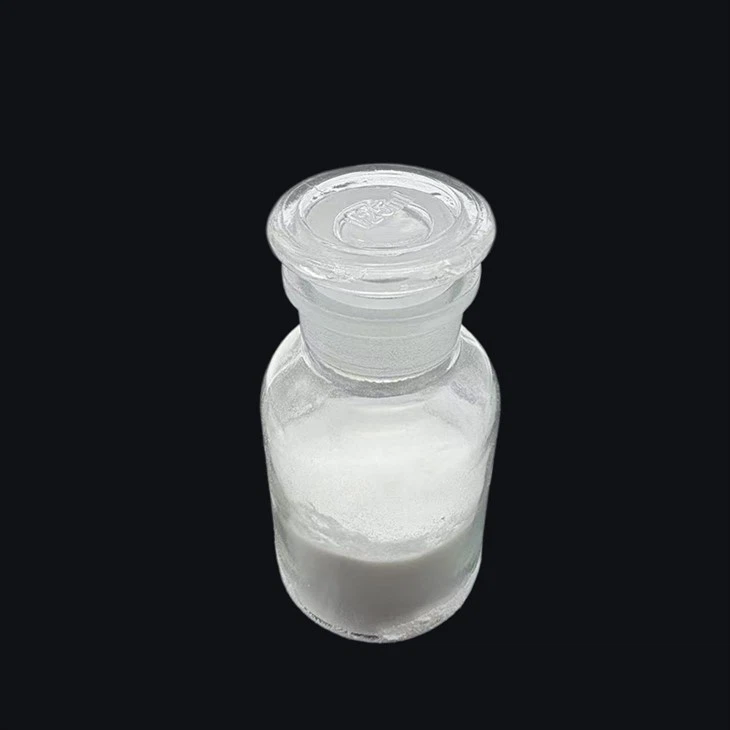
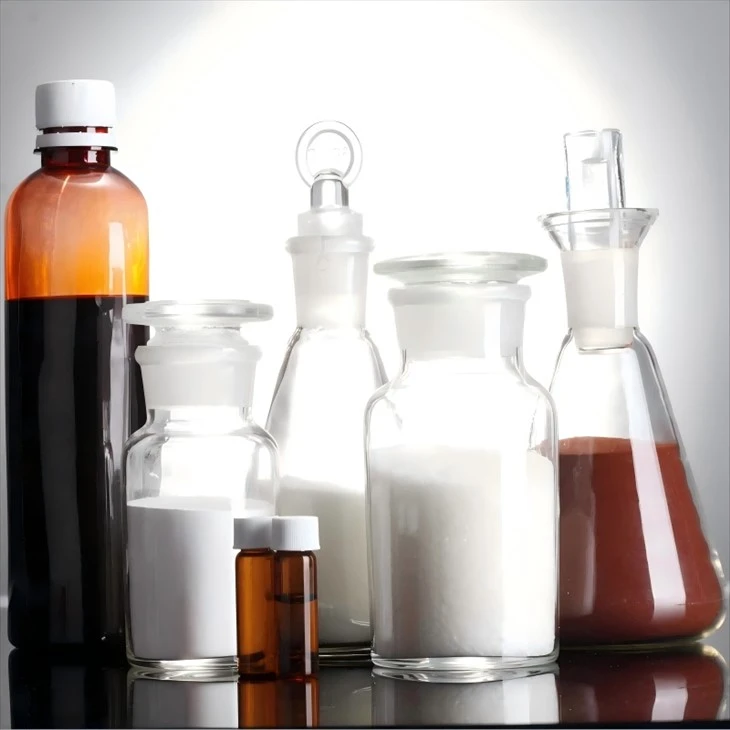
Polyvinylpyrrolidone (PVP), also known as povidone, is a water - soluble polymer with a wide range of applications in various industries such as pharmaceuticals, cosmetics, and food. PVP K15 is a specific grade of PVP with a relatively low molecular weight, which gives it unique properties and makes it suitable for many specialized uses. As a PVP K15 supplier, I am delighted to delve into the chemical reactions involved in its synthesis.
Monomer Selection: 1 - Vinyl - 2 - pyrrolidone
The synthesis of PVP K15 begins with the selection of the monomer, 1 - vinyl - 2 - pyrrolidone (NVP). NVP is a key building block for PVP. It is a cyclic amide with a vinyl group attached, which allows it to undergo polymerization reactions. The chemical structure of NVP contains a five - membered lactam ring and a vinyl double bond. The lactam ring provides stability and solubility characteristics to the resulting polymer, while the vinyl double bond is the reactive site for polymerization.
The preparation of NVP itself involves several chemical steps. One common method starts from butyrolactone and ammonia. First, butyrolactone reacts with ammonia to form 4 - aminobutyric acid. Then, 4 - aminobutyric acid undergoes cyclization to form 2 - pyrrolidone. Finally, 2 - pyrrolidone is vinylated using acetylene or other vinylating agents to produce 1 - vinyl - 2 - pyrrolidone.
Polymerization Reactions
The polymerization of 1 - vinyl - 2 - pyrrolidone to form PVP K15 is typically carried out through a free - radical polymerization process. Free - radical polymerization is a chain - reaction mechanism that consists of three main steps: initiation, propagation, and termination.
Initiation
In the initiation step, a free - radical initiator is used to generate free radicals. Common initiators for the polymerization of NVP include peroxides, azo compounds, and redox systems. For example, azobisisobutyronitrile (AIBN) is a widely used initiator. When AIBN is heated, it decomposes into two isobutyronitrile radicals:
[ (CH_3)_2C(CN)-N=N - C(CN)(CH_3)_2\rightarrow2(CH_3)_2C(CN)^{\cdot}]
These free radicals then react with the vinyl double bond of 1 - vinyl - 2 - pyrrolidone, initiating the polymerization process. The radical attacks the double bond, breaking it and forming a new carbon - carbon single bond and a new radical at the other end of the NVP molecule:
[(CH_3)_2C(CN)^{\cdot}+CH_2 = CH - C_4H_6NO\rightarrow(CH_3)_2C(CN)-CH_2 - CH^{\cdot}-C_4H_6NO]
Propagation
Once the initiation step has occurred, the propagation step begins. In this step, the growing polymer chain with a free radical at its end reacts with another NVP monomer. The radical on the polymer chain attacks the vinyl double bond of the incoming NVP monomer, adding it to the chain and generating a new radical at the end of the extended chain. This process repeats itself, with each addition of a new NVP monomer increasing the length of the polymer chain:
[\cdots - CH_2 - CH^{\cdot}-C_4H_6NO+CH_2 = CH - C_4H_6NO\rightarrow\cdots - CH_2 - CH - C_4H_6NO - CH_2 - CH^{\cdot}-C_4H_6NO]
The propagation step continues until the termination step occurs. The rate of propagation is influenced by factors such as the concentration of the monomer, the temperature, and the nature of the initiator.
Termination
There are several ways for the polymerization reaction to terminate. One common termination mechanism is combination, where two growing polymer chains with free radicals at their ends react with each other, forming a single polymer chain with no free radicals:
[\cdots - CH_2 - CH^{\cdot}-C_4H_6NO+\cdots - CH_2 - CH^{\cdot}-C_4H_6NO\rightarrow\cdots - CH_2 - CH - C_4H_6NO - CH - CH_2-\cdots]
Another termination mechanism is disproportionation. In this process, a hydrogen atom is transferred from one growing polymer chain to another. One chain becomes saturated, while the other forms a double bond at the end:
[\cdots - CH_2 - CH^{\cdot}-C_4H_6NO+\cdots - CH_2 - CH^{\cdot}-C_4H_6NO\rightarrow\cdots - CH_2 - CH_2 - C_4H_6NO+\cdots - CH = CH - C_4H_6NO]
Controlling the Molecular Weight: Achieving PVP K15
The molecular weight of the resulting PVP polymer is a crucial factor, and for PVP K15, a specific molecular weight range needs to be achieved. The K - value is an empirical measure related to the viscosity of the polymer solution, which is in turn related to the molecular weight. To control the molecular weight and obtain PVP K15, several factors can be adjusted during the polymerization process.
The concentration of the initiator plays a significant role. A higher initiator concentration will lead to a larger number of initiation sites, resulting in more polymer chains being formed. Since the total amount of monomer is fixed, more chains mean shorter chains on average, and thus a lower molecular weight. Temperature also affects the molecular weight. Higher temperatures generally increase the rate of the polymerization reaction but can also increase the rate of termination reactions, which may lead to a lower molecular weight.
Chain - transfer agents can also be used to control the molecular weight. A chain - transfer agent is a compound that can react with the growing polymer chain, transferring the free radical from the polymer chain to the chain - transfer agent. This stops the growth of the current polymer chain and initiates the growth of a new chain. By carefully selecting the type and concentration of the chain - transfer agent, the molecular weight of the PVP can be precisely controlled to achieve the desired K - value of 15.
Applications and Significance of PVP K15
PVP K15 has a wide range of applications due to its unique properties. In the pharmaceutical industry, it is used as a binder in tablet formulations, a solubilizer for poorly soluble drugs, and a stabilizer for drug suspensions. Its low molecular weight allows it to dissolve quickly, making it suitable for fast - acting pharmaceutical products.
In the cosmetics industry, PVP K15 is used in hair sprays, shampoos, and lotions. It can form a thin, flexible film on the hair or skin, providing hold and moisture - retention properties. In the food industry, it can be used as a clarifying agent for beverages and a coating agent for food products.
As a PVP K15 supplier, we understand the importance of providing high - quality products. Our PVP K15 is synthesized using advanced processes that ensure consistent quality and the desired molecular weight. We are committed to meeting the diverse needs of our customers in different industries.
If you are interested in learning more about 1 - vinyl - 2 - pyrrolidone Homopolymer, Vinylpyrrolidone Linear Homopolymer, or Povidone K30 Pharma Grade, or if you are looking to purchase PVP K15 for your specific applications, please feel free to contact us for more information and to start a procurement negotiation.
References
- Odian, G. Principles of Polymerization. John Wiley & Sons, 2004.
- Rowe, R. C., Sheskey, P. J., & Quinn, M. E. Handbook of Pharmaceutical Excipients. Pharmaceutical Press, 2009.
- Cosmetic Ingredient Review Expert Panel. Safety Assessment of Polyvinylpyrrolidone as Used in Cosmetics. International Journal of Toxicology, 2002, 21(Suppl 3), 9 - 21.