

 русский
  Kreyòl Ayisyen
 Gaeilgenah Éireann
 Norsk
Norsk Srbija jezik (latinica)
 bosanski
 Português
 Français
 magyar
 বাংলা
বাংলা Polski



The right povidone grade is not simply the one with the highest K value. It is the grade that provides the molecular weight, viscosity, binding strength, solubility, and formulation performance required by the finished product.Selecting the correct povidone molecular weight is an important step when developing pharmaceutical formulations, cosmetics, and other products based on polyvinylpyrrolidone (PVP). Among the specifications used to distinguish different grades, the K value is one of the most practical indicators.
For purchasing teams and formulation scientists, terms such as Povidone K15, Povidone K17, Povidone K25, Povidone K30, Povidone K60 and Povidone K90 do more than identify different products. They indicate differences in polymer chain length, solution viscosity, binding performance, film formation, and suitability for particular applications.However, K value should not be treated as a direct molecular-weight number. It is a viscosity-related characteristic that correlates with the molecular weight of PVP. In general, a higher K value corresponds to a higher molecular weight and stronger thickening or film-forming behavior.
This guide explains how to interpret the K value and how buyers can use it when selecting pharmaceutical grade povidone.

Leading Povidone Manufacturer: Huzhou Sunflower Pharmaceutical Co., Ltd.
Huzhou Sunflower Pharmaceutical Co., Ltd. is a manufacturer focused on PVP and pharmaceutical excipient products. Its SUNVIDONE® K series includes multiple povidone grades for pharmaceutical and formulation applications.
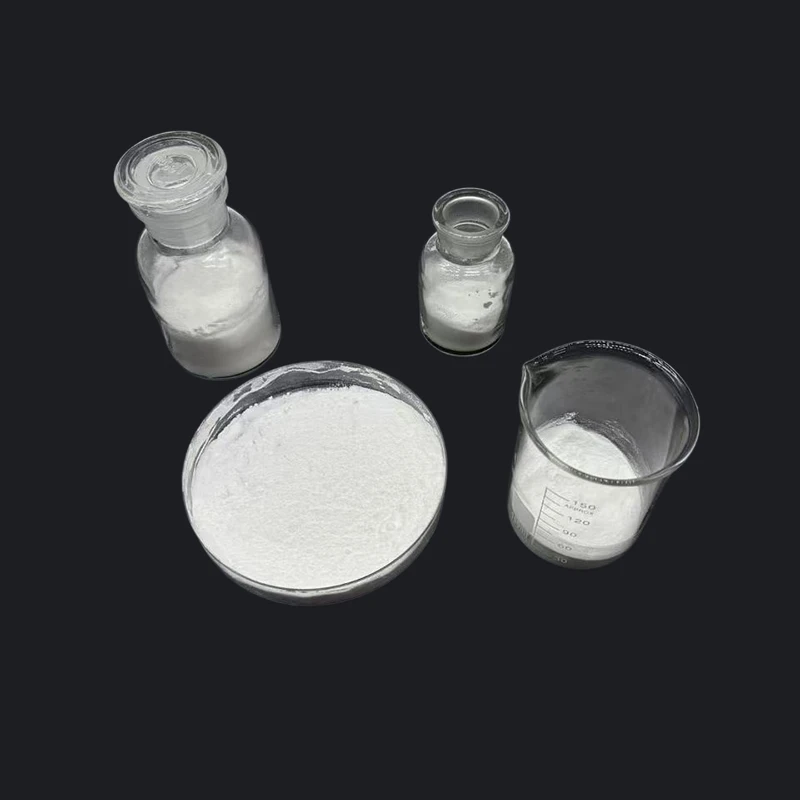
According to the company's product information, the SUNVIDONE® K series is supplied as an almost white, free-flowing powder and is designed to meet the requirements of major pharmacopoeial standards, including USP/JP and CP. Available grades include K15, K17, K25, K30 and K90.
The company also provides povidone products for applications involving:
Tablet and capsule binding
Granulation
Film formation
Solubilization
Suspension stabilization
Ophthalmic formulations
Topical and transdermal products
Pharmaceutical and medical applications
For buyers comparing PVP manufacturers, the important point is not only the nominal K value. Consistent specifications, impurity control, documentation, batch-to-batch stability, and suitability for the intended dosage form should also be evaluated.
What Does the K Value of Povidone Mean?
The K value of PVP is a calculated viscosity-related parameter used to characterize povidone polymers.
Because polymer chain length affects the way a PVP solution flows, the K value provides a practical way to distinguish grades with different molecular-weight characteristics.
The relationship can be simplified as:
Higher K value → generally higher molecular weight → higher solution viscosity
This does not mean that K30 has a molecular weight of 30,000 or that K90 has a molecular weight of 90,000. The number is a K-value classification, not a molecular-weight measurement expressed in Daltons.
For example, published pharmaceutical literature associates K12, K15, K17, K25, K30, K60 and K90 with progressively increasing molecular-weight ranges.
Therefore, a buyer should avoid selecting a PVP grade solely by assuming that the K number equals molecular weight.
K Value and Povidone Molecular Weight
Molecular weight is important because it influences how PVP behaves in a formulation.
As molecular weight increases, polymer chains become longer. This generally results in greater interaction between polymer chains and a stronger effect on solution viscosity, binding, film formation and rheological behavior.
A simplified comparison is shown below:
| Povidone Grade | Relative Molecular Weight | Typical Behavior | Common Application Direction |
|---|---|---|---|
| K15 | Low | Low viscosity, good mobility | Solubilization, dispersion |
| K17 | Low | Low-to-moderate viscosity | Pharmaceutical solutions |
| K25 | Medium-low | Moderate binding | Tablets and granules |
| K30 | Medium | Balanced binding and viscosity | Tablet binder, solubilizer |
| K60 | High | Higher viscosity and binding | Specialized formulations |
| K90 | Very high | Strong binding and film formation | High-viscosity and topical systems |
The exact molecular-weight range should always be confirmed against the supplier's current specification and analytical documentation rather than estimated only from the K designation.
How K Value Changes Povidone Performance
1. Solution Viscosity
One of the most obvious differences between PVP grades is solution viscosity.
Low-K povidone generally produces solutions with lower viscosity, making it easier to process when rapid dissolution, pumping, spraying or low-viscosity formulation is required.
Higher-K grades create greater viscosity at comparable concentrations. This can be useful when a formulation requires stronger thickening, suspension stabilization or film formation.
This is why PVP K30 is often selected when formulators need a balance between processing characteristics and binding performance, while PVP K90 may be considered when stronger polymer functionality is required.
2. Binding Strength
Povidone is widely used as a pharmaceutical binder.
During granulation, PVP can help particles adhere to one another. After drying, the polymer contributes to the mechanical strength of the resulting granules and tablets.
The choice of K value can therefore influence:
Granule strength
Tablet hardness
Friability
Disintegration behavior
Binder solution viscosity
Processing efficiency
A higher K value is not automatically better. Excessive binding can make a formulation more difficult to disintegrate or process.
For many conventional solid dosage formulations, Povidone K30 provides a useful balance between binding strength and processability.
3. Film Formation
PVP can form transparent films after drying.
The molecular weight of the polymer affects film characteristics, including strength, flexibility and adhesion.
Lower-molecular-weight PVP grades may be preferable when low solution viscosity and easy processing are priorities. Higher-molecular-weight grades can provide stronger polymeric networks and more pronounced film-forming effects.
This makes K-value selection particularly relevant to:
Pharmaceutical coatings
Topical preparations
Adhesive systems
Hair styling formulations
Cosmetic film-forming products
4. Solubilization and Stabilization
PVP has strong water solubility and can interact with various active ingredients.
Lower and medium molecular-weight grades can be useful when the formulation requires a soluble polymer that does not excessively increase viscosity.
PVP is also used as a stabilizing or dispersing component in certain formulations. The appropriate grade depends on the active ingredient, concentration, dosage form and required physical stability.
K15 vs K17 vs K25: When Should Buyers Consider Lower K Values?
Lower-K povidone grades are generally considered when formulation developers need relatively low viscosity and good processing characteristics.
Povidone K15 and Povidone K17 can be considered for formulations where excessive viscosity would negatively affect manufacturing or product performance.
Povidone K25 sits closer to the middle of the low-to-medium molecular-weight range and may provide more binding capability than lower-K grades.
These grades may be relevant to:
Liquid pharmaceutical formulations
Solubilization systems
Dispersion systems
Certain oral dosage forms
Specialized pharmaceutical excipient applications
The final selection should be based on formulation trials rather than K value alone.
Why Is Povidone K30 So Widely Used?
PVP K30 is one of the most commonly recognized povidone grades because it offers a practical balance between molecular weight, viscosity and binding performance.
SUNVIDONE® K30 has a specified K-value range of 27.0–32.4. The product is supplied as a free-flowing powder and is positioned for pharmaceutical applications involving binding, film formation, solubilization and suspension stabilization.
For pharmaceutical buyers, K30 can be a starting point when developing:
Tablets
Capsules
Granules
Oral formulations
Film-forming systems
Solubilization systems
However, K30 should not be selected simply because it is a popular grade. The correct concentration, manufacturing process and dosage form still need to be evaluated.
When Should Povidone K90 Be Selected?
Povidone K90 has a substantially higher K value than K30 and therefore represents a much higher molecular-weight PVP grade.
SUNVIDONE® K90 is specified at a K-value range of 81.0–97.2.
Its higher molecular weight makes K90 more suitable when stronger polymeric functionality is required, such as:
High-viscosity formulations
Strong film-forming systems
Certain topical formulations
Adhesive applications
Suspension stabilization
Specialized pharmaceutical formulations
However, the higher viscosity can also make processing more demanding. A formulation that works efficiently with K30 should not automatically be changed to K90 simply to obtain stronger binding.
K30 vs K90: A Practical Comparison
| Factor | Povidone K30 | Povidone K90 |
|---|---|---|
| Molecular weight | Medium | Very high |
| K value | 27.0–32.4 | 81.0–97.2 |
| Solution viscosity | Lower | Much higher |
| Binding | Good | Strong |
| Film formation | Good | Strong |
| Processing | Generally easier | Requires more formulation control |
| Typical role | General-purpose pharmaceutical excipient | High-viscosity/strong polymer applications |
| Best selection logic | Balance of performance and processability | Strong polymer effect is required |
This comparison illustrates why povidone molecular weight selection should be based on the desired formulation performance rather than simply choosing the highest available grade.
How to Select the Right Povidone K Value
A practical purchasing decision can follow five steps.
First identify whether the product is a tablet, capsule, granule, liquid, ophthalmic preparation, topical formulation or another dosage form.
The same PVP grade may perform differently in different systems.
Ask what the polymer is expected to do.
Is the primary purpose:
Binding?
Solubilization?
Film formation?
Suspension stabilization?
Viscosity control?
Adhesion?
The answer will narrow the appropriate K-value range.
If the formulation must be sprayed, pumped or rapidly mixed, excessive viscosity can become a manufacturing problem.
In these cases, a lower or medium K value may be more practical.
If the formulation requires stronger binding or film formation, a higher molecular-weight PVP may provide advantages.
But increasing K value can also change disintegration, dissolution and processing behavior.
For pharmaceutical manufacturing, buyers should request the relevant:
Certificate of Analysis
Product specification
Pharmacopoeial compliance information
Residual monomer data
Heavy-metal information
Peroxide data
Moisture specification
Batch consistency documentation
For example, the SUNVIDONE® K series specifies limits for impurities, peroxides, aldehydes, hydrazine and other quality parameters.
What Should Buyers Ask a Povidone Manufacturer?
When sourcing PVP pharmaceutical grade, price should not be the only comparison point.
A professional RFQ should include the required K value, dosage form, application, annual demand, packaging requirements and applicable pharmacopoeia.
Buyers should also confirm whether the manufacturer can provide consistent production across multiple batches and whether the proposed material is suitable for their regulatory market.
For example, a buyer requesting PVP K30 powder should specify whether USP/NF, Ph. Eur., JP or another standard is required instead of simply asking for "PVP K30."
This prevents suppliers from quoting technically different grades under the same commercial name.
Frequently Asked Questions About Povidone K Value
Generally, yes. K value is positively related to PVP molecular weight, so higher-K grades normally have higher molecular weight and higher solution viscosity. However, K value is not itself a molecular-weight unit and should not be converted directly into Daltons.
Povidone K30 is widely used as a pharmaceutical binder in tablets and granules because it provides a useful balance between binding performance, viscosity and processability. The final concentration should be established through formulation trials.
The main difference is molecular-weight level and resulting polymer behavior. K90 has a much higher K value and generally produces stronger viscosity and film-forming effects, while K30 offers more moderate viscosity and broad formulation flexibility.
Compare the required binding strength, solution viscosity, dosage form and manufacturing process. If K25 provides sufficient binding while maintaining the desired processing characteristics, there may be no technical reason to move to K30.
No. K value is a viscosity-related classification and correlates with molecular weight rather than directly expressing it. Buyers should refer to the manufacturer's technical documentation for molecular-weight information.
A useful RFQ should state the required K value, pharmaceutical standard, intended application, dosage form, estimated quantity, packaging requirement, target market and documentation requirements. Providing this information allows the manufacturer to recommend the most appropriate povidone grade instead of offering a generic PVP product.
Conclusion
Understanding the relationship between K value and povidone molecular weight is essential for selecting the right PVP grade.
Lower-K grades generally provide lower viscosity and easier processing, while higher-K grades deliver stronger polymeric effects such as viscosity increase, binding and film formation. Povidone K30 remains an important general-purpose pharmaceutical excipient because of its balanced properties, while Povidone K90 is better considered when a stronger high-molecular-weight polymer effect is specifically required.
For pharmaceutical buyers, the best approach is to start with the intended function, dosage form and manufacturing process, then select the appropriate K value and verify the product against the required pharmacopoeial specifications.
Huzhou Sunflower Pharmaceutical Co., Ltd. provides the SUNVIDONE® K series across multiple K-value grades, giving formulators and purchasing teams options for different pharmaceutical applications. By matching molecular-weight characteristics with actual formulation requirements, buyers can improve processing consistency, product performance and long-term supply reliability.