

 русский
  Kreyòl Ayisyen
 Gaeilgenah Éireann
 Norsk
Norsk Srbija jezik (latinica)
 bosanski
 Português
 Français
 magyar
 বাংলা
বাংলা Polski

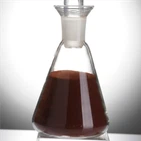

Polyvinyl Pyrrolidone (PVP), also known as polyvinyl pyrrolidone, is a water-soluble polymer compound. It is widely used in many industries such as medicine, food, cosmetics, and textiles due to its good solubility, film-forming properties, adhesion, and biocompatibility. However, how to dissolve PVP efficiently and stably has always been the focus of attention in related industries. Recently, research and discussion on PVP dissolution methods have continued to heat up, which not only affects production efficiency, but also affects product quality and performance. This article will deeply analyze the dissolution method of PVP and report it in combination with the latest industry trends.

Table of contents
1. A review of PVP dissolution methods
(I) Solvent selection is the key
(II) Stirring and mixing accelerate dissolution
(III) Temperature helps dissolution efficiency
2. Industry focus on PVP dissolution problems
(I) Pharmaceutical industry: related to drug efficacy
(II) Food industry: affects product quality
(III) Cosmetics industry: determines the user experience
A review of PVP dissolution methods
(I) Solvent selection is the key.
PVP is easily soluble in water, alcohols (such as ethanol, isopropanol), halogenated hydrocarbon solvents, amines, nitroalkanes and low molecular weight fatty acids. Among them, water and ethanol are the most commonly used. In the pharmaceutical field, water is often used as a solvent to dissolve PVP to ensure its safety and compatibility when preparing drug preparations to ensure its safety and compatibility. For example, in the production of a certain oral liquid preparation, PVP K30 is dissolved in deionized water as a co-solvent and thickener for the drug to improve the stability and taste of the drug. In the cosmetics industry, ethanol is often used to dissolve PVP due to its volatility and good solubility, and is used to prepare products such as hair spray and styling spray. In an experiment, PVP K90 was dissolved in ethanol as a solvent, and the resulting solution was able to form a strong and shiny film on the surface of the hair, effectively improving the durability of the hairstyle.
(II) Stirring and mixing to accelerate dissolution.
Mechanical stirring or mixing is essential in the process of dissolving PVP. Slowly adding PVP powder to the stirring solvent can avoid agglomeration and promote its rapid dispersion. Taking the preparation of PVP solution in the laboratory as an example, 10g PVP K15 powder is slowly added to a beaker containing 100ml deionized water, and the magnetic stirrer is turned on at the same time. The speed is set to 300 rpm. After 15 minutes, the solution becomes uniform and transparent. Without stirring, the PVP powder floats on the water surface and is difficult to completely dissolve for several hours. In industrial production, large-scale stirring equipment can handle a large amount of materials. For example, when a food processing plant produces juice clarifiers, it uses a reactor with a paddle stirrer to evenly dissolve PVP in the solution system to improve production efficiency.
(III) Temperature helps dissolution efficiency
Appropriately increasing the temperature can speed up the dissolution of PVP, but the range needs to be strictly controlled. Generally speaking, the temperature should not exceed 60°C, otherwise it may cause PVP degradation and affect product performance. Research data shows (see Table 1):
| Temperature (℃) | Dissolution time (PVP K30, 10g dissolved in 100ml water) | Solution stability (observed after 24 hours) |
| 25℃ | 30 minutes | No significant change |
| 40℃ | 15 minutes | No significant change |
| 60℃ | 8 minutes | The solution is slightly yellowish, with a small amount of floccules |
| 80℃ | 5 minutes | The solution turns yellow, with more floccules and precipitation |
When a pharmaceutical company produces drug coating materials, it controls the dissolution temperature at 45°C, which can quickly dissolve PVP and ensure product quality. However, in cosmetic production, too high a temperature may destroy other heat-sensitive ingredients in the formula, so a careful balance is required.
Industry focus on PVP dissolution problems
(I) Pharmaceutical industry: related to drug efficacy
In the pharmaceutical industry, the dissolution state of PVP directly affects the release and absorption of drugs. For example, when preparing solid dispersions, PVP as a carrier needs to be evenly dissolved and mixed with drugs. If the dissolution is incomplete, it may cause uneven dispersion of drugs and affect the efficacy. Recently, many pharmaceutical companies have invested in research and development resources to optimize the PVP dissolution process to improve the quality of drugs. A new tablet developed by a well-known pharmaceutical company has improved the drug solubility by 20% by improving the PVP dissolution method, and the clinical trial effect has been significantly improved.
(II) Food industry: affecting product quality
In the food industry, PVP is often used for the clarification of beer and fruit wine and the modification of food packaging materials. In the beer production process, PVP can effectively absorb polyphenols after dissolution to prevent beer turbidity. However, if PVP is not fully dissolved, not only will the clarification effect fail to be achieved, but impurities may also be introduced, affecting the taste and shelf life of the beer. A large brewery upgraded its dissolution equipment and adopted precise temperature control and efficient stirring systems to ensure that PVP was completely dissolved. The clarity and stability of the product were greatly improved, and the defective rate was reduced by 15%.
(III) Cosmetics industry: Determines the user experience
In cosmetics, PVP is used as a thickening and film-forming agent in skin care products and as a setting agent in hair products. If the dissolution is not good, skin care products may be stratified and agglomerated, and hair products cannot be effectively set, affecting the consumer experience. Recently, cosmetic raw material suppliers and brand owners have strengthened cooperation to jointly explore the best solution for PVP dissolution. A new hair spray product launched by a cosmetic brand has improved the durability of the product's setting effect by 30% by optimizing the PVP dissolution process, which has been highly recognized by the market.
As the demand for PVP in various industries continues to grow, research on its dissolution technology will continue to deepen. In the future, it is expected that more efficient, gentle and environmentally friendly dissolution methods will be developed, such as using ultrasound, microwave and other technologies to assist dissolution, which can not only increase the dissolution rate, but also avoid the impact of high temperature on PVP performance. At the same time, the cooperation between enterprises in the industry will be closer, jointly overcome the problem of PVP dissolution, and promote the high-quality development of related industries. Whether it is to improve the efficacy of medicine in the pharmaceutical field or to optimize product quality in the food and cosmetics industry, the innovation of PVP dissolution technology will become a key driving force and bring new development opportunities to various industries.
At the moment when biotechnology and nanotechnology are developing rapidly, PVP, as a polymer material with excellent performance, has gradually become a research hotspot for the integration of its dissolution technology and emerging technologies. For example, combining nanoparticles with PVP solutions is expected to develop new materials with special functions, opening up new paths for its application in cutting-edge fields such as biomedicine and smart materials.