

 русский
  Kreyòl Ayisyen
 Gaeilgenah Éireann
 Norsk
Norsk Srbija jezik (latinica)
 bosanski
 Português
 Français
 magyar
 বাংলা
বাংলা Polski

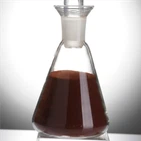

Iodine is a chemical element that has various applications in medicine and related fields. For example, it can be used as a disinfectant, an antiseptic, a contrast agent in medical imaging, and as an ingredient in pharmaceuticals. In this article, we will discuss how to prepare iodine in pharmaceutical inorganic chemistry.
One of the most common methods for preparing iodine is by reacting iodide with oxidizing agents. The most common oxidizing agent used for this purpose is potassium dichromate (K2Cr2O7). The reaction occurs in acidic solution and is as follows:
2KI + K2Cr2O7 + H2SO4 → I2 + Cr2(SO4)3 + K2SO4 + H2O
In this reaction, the potassium dichromate is reduced to chromium(III) sulfate, while iodide is oxidized to iodine. The sulfuric acid provides the necessary acidic environment for the reaction to occur.
Another method for preparing iodine is by reacting sodium hypoiodite (NaIO) with hydrochloric acid (HCl). The reaction can be written as:
NaIO + HCl → I2 + NaCl + H2O
In this reaction, sodium hypoiodite is decomposed to iodine and sodium chloride in the presence of hydrochloric acid.
One more method for preparing iodine is by heating iodate salts to a high temperature. Iodate salts can be obtained by adding iodine to a hot solution of alkali metal hydroxide and then adding an oxidizing agent. The reaction can be written as:
IO3- + 5HNO3 → I2 + 5NO2 + 3H2O
In this reaction, the iodate salt is decomposed into iodine, nitrogen dioxide, and water.
Once iodine has been prepared, it can be purified by sublimation. The iodine is heated to a temperature where it vaporizes, and then condensed onto a cool surface, where it crystallizes. The crystals can then be washed with distilled water to remove any impurities.
Finally, iodine can be prepared in the form of iodine tincture, which is a solution of iodine in alcohol. To prepare this solution, iodine is dissolved in a solution of potassium iodide in water, and then the resulting solution is added to alcohol. The alcohol helps to dissolve the iodine and makes it easier to apply as an antiseptic or disinfectant.
In conclusion, iodine can be prepared using different methods depending on the specific application. It is an essential element in many pharmaceutical products and is widely used in medicine and related fields. The preparation of iodine is an important aspect of pharmaceutical inorganic chemistry, and it is crucial to ensure that the final product is of high quality and purity.