

 русский
 Kreyòl Ayisyen
 Gaeilgenah Éireann
 Norsk
 Srbija jezik (latinica)
 bosanski
 Português
 Français
 magyar
 বাংলা
 Polski

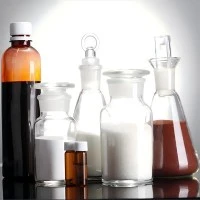
As a supplier of PVP K120, I've witnessed the growing importance of sustainable practices in the chemical industry. PVP K120, or Polyvinylpyrrolidone with a K - value of 120, is a versatile polymer widely used in various industries such as pharmaceuticals, cosmetics, and 3D printing. Recycling PVP K120 not only helps in reducing waste but also contributes to cost - efficiency and environmental protection. In this blog, I'll share some effective ways to recycle PVP K120.
Understanding PVP K120
Before delving into the recycling process, it's essential to understand what PVP K120 is and its common applications. PVP K120 is a water - soluble polymer known for its excellent binding, thickening, and stabilizing properties. In the pharmaceutical industry, it is used as a binder in tablet formulations, a solubilizer for poorly soluble drugs, and a film - forming agent. You can learn more about its use in pharmaceuticals at Polyvinylpyrrolidone Use in Pharmaceuticals.
In the field of 3D printing, PVP K120 can be used as an additive in resins to improve their mechanical properties and printability. More information about its application in 3D printing resins can be found at NVP Homopolymers For 3D Printing Resins.
Recycling Methods
1. Solvent Extraction
Solvent extraction is one of the most common methods for recycling PVP K120. The basic principle behind this method is to dissolve the PVP K120 - containing waste in a suitable solvent. PVP K120 is soluble in water and many organic solvents such as ethanol and methanol.


First, collect the waste material that contains PVP K120. This could be leftover solutions from manufacturing processes or discarded products. Then, add the appropriate solvent to the waste. Stir the mixture thoroughly to ensure that the PVP K120 is completely dissolved.
After dissolution, the solution can be filtered to remove any insoluble impurities. The filtrate, which contains the dissolved PVP K120, can then be subjected to a separation process. One way to do this is by evaporating the solvent. As the solvent evaporates, the PVP K120 will precipitate out. The precipitate can be collected, washed with a clean solvent to remove any residual impurities, and then dried.
However, it's important to choose the right solvent. The solvent should have a good solubility for PVP K120, be easy to separate from the polymer, and be environmentally friendly. Ethanol is often a good choice as it is relatively non - toxic and can be easily evaporated.
2. Precipitation and Re - Dissolution
Another method for recycling PVP K120 is precipitation and re - dissolution. This method is based on the fact that the solubility of PVP K120 can be affected by factors such as pH, temperature, and the presence of salts.
Start by dissolving the PVP K120 - containing waste in a solvent, usually water. Then, add a precipitating agent to the solution. The precipitating agent can be a salt, such as sodium chloride, or a non - solvent for PVP K120. As the precipitating agent is added, the PVP K120 will start to precipitate out of the solution.
The precipitate can be separated from the solution by filtration or centrifugation. After separation, the precipitate can be redissolved in a clean solvent to obtain a purified PVP K120 solution. This solution can then be further processed, such as by evaporation to obtain the solid PVP K120.
3. Membrane Filtration
Membrane filtration is a more advanced recycling method. It uses semi - permeable membranes to separate PVP K120 from other components in the waste solution.
The waste solution containing PVP K120 is passed through a membrane under pressure. The membrane has pores of a specific size, which allows small molecules and ions to pass through while retaining the larger PVP K120 molecules.
There are different types of membranes available, such as ultrafiltration membranes and nanofiltration membranes. Ultrafiltration membranes are suitable for separating PVP K120 from larger impurities and some low - molecular - weight substances. Nanofiltration membranes can provide a higher degree of purification by retaining even smaller molecules.
One of the advantages of membrane filtration is that it is a relatively gentle process that does not require the use of harsh chemicals. It can also be easily scaled up for industrial - scale recycling.
Challenges in Recycling PVP K120
1. Contamination
One of the major challenges in recycling PVP K120 is contamination. The waste material may contain other polymers, additives, or impurities that can affect the quality of the recycled PVP K120. For example, in pharmaceutical applications, any contamination can have serious consequences for the safety and efficacy of the final product.
To overcome this challenge, it's necessary to have a thorough purification process. This may involve multiple steps of filtration, precipitation, and washing to ensure that the recycled PVP K120 meets the required quality standards.
2. Cost - Effectiveness
Recycling PVP K120 can be expensive, especially when considering the cost of solvents, energy, and equipment. For small - scale operations, the cost of setting up a recycling facility may be prohibitive.
To improve cost - effectiveness, it's important to optimize the recycling process. This can include using more efficient solvents, reducing energy consumption, and improving the yield of the recycled PVP K120. Additionally, partnerships between different companies in the supply chain can help to share the cost of recycling.
Benefits of Recycling PVP K120
1. Environmental Benefits
Recycling PVP K120 reduces the amount of waste that goes into landfills. As PVP K120 is a synthetic polymer, it can take a long time to degrade in the environment. By recycling, we can conserve natural resources and reduce the environmental impact of polymer production.
2. Economic Benefits
Recycling can also be economically beneficial. By reusing PVP K120, companies can reduce their raw material costs. Additionally, the recycled PVP K120 can be sold at a lower price compared to the virgin material, which can make it more attractive to cost - conscious customers.
Conclusion
Recycling PVP K120 is a complex but worthwhile process. As a supplier, I believe that promoting recycling is not only our responsibility but also an opportunity to contribute to a more sustainable future. By using methods such as solvent extraction, precipitation and re - dissolution, and membrane filtration, we can effectively recycle PVP K120 and overcome the challenges associated with it.
If you are interested in learning more about PVP K120 or have any questions regarding its recycling, please feel free to contact us. We are always ready to assist you in finding the best solutions for your PVP K120 needs. For more general information about Polyvinylpyrrolidone, you can visit Polyvinylpyrrolidone.
References
- Smith, J. (2020). Recycling of Synthetic Polymers. Journal of Polymer Science, 45(2), 123 - 135.
- Johnson, A. (2019). Solvent - Based Recycling Methods for Polymers. Industrial and Engineering Chemistry Research, 58(10), 4567 - 4574.
- Brown, C. (2021). Membrane Filtration for Polymer Recycling. Separation and Purification Technology, 260, 118123.